
What is digital direct-to-garment printing (DTG)?
Direct-to-garment printing, also known as DTG, is a printing process on textiles and garments using specialised inkjet technology. It applies special inks directly onto the fabric, which are absorbed by the fibres.
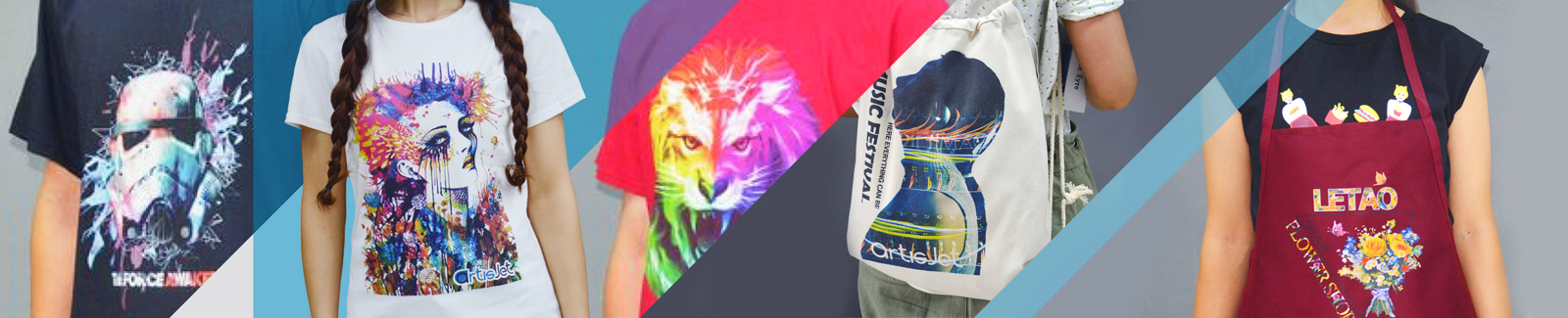
DTG vs. other garment printing methods
- Sublimation — the image is first printed onto transfer paper, then applied to the fabric with heat and pressure. Limited to polyester.
- Heat transfer — combines heat and pressure to apply designs. Suitable for short runs but with durability limitations.
- Screen printing — pushes ink through a mesh. Excellent for large runs, but complex for customised designs or short runs.
- Digital DTG — prints directly onto the garment as if it were paper. Much less time and labour than traditional methods.
Advantages of DTG printing
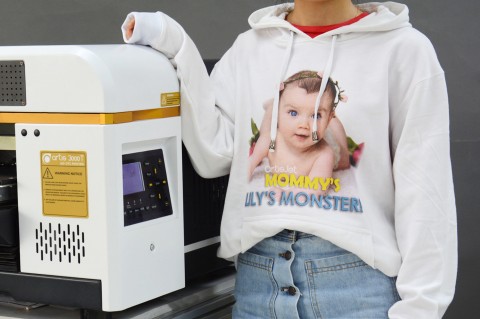
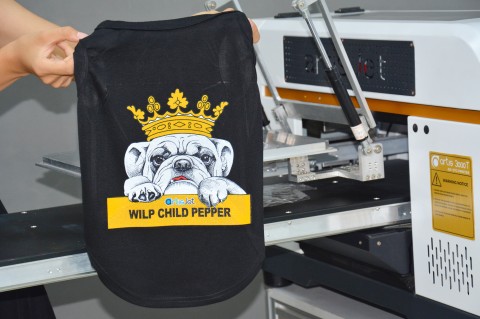
- ✅ Most coloured garments can be printed — white ink channel for dark and transparent backgrounds.
- ✅ Wide range of applications: t-shirts, caps, sweatshirts, socks, bags, towels and more.
- ✅ Water-based inks, non-toxic and environmentally friendly, with excellent colour fastness, high elasticity and no cracking.
- ✅ Ideal for short runs, prototypes and high-end customised garments.
- ✅ Various on-demand print platens to facilitate the process — easy to print at low cost with no minimum order quantity.
The DTG printing process is simple
- 1. Pre-treatment — prepares the garment for printing.
- 2. Load the printer — place the garment and get ready to print.
- 3. Print and sell — let the printer do its job, finish with heat press and sell.
Recommended artisJet DTG printers
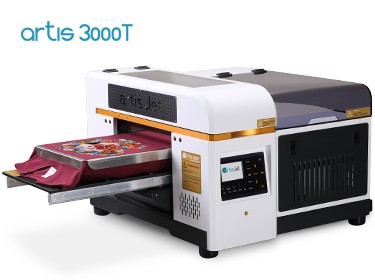
artis 3000T — B3 format, ideal for SMEs and professional customisation.
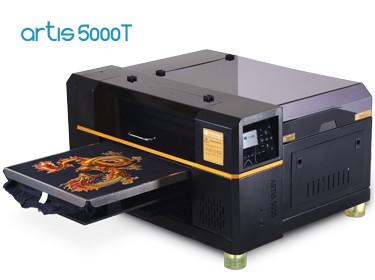
artis 5000T — larger format and higher speed for greater production volume.
Want to explore DTG printing for your textile business? Request a sample or demonstration.
📞 +31 308 080 273 · 📧 info@artisjet-printers.eu